
Choosing the right yoga mat can make a world of difference in your practice, offering the comfort, stability and durability that are essential for a safe and enjoyable yoga experience. With various options on the market, it can be overwhelming to decide which material is best. Among the choices, TPE (Thermoplastic Elastomer) is gaining popularity for its eco-friendly properties, comfort and performance.
This guide covers three things: why TPE beats PVC and other materials, how to choose the right TPE mat for your practice, and how to clean and care for it so it lasts for years.
What is TPE?
TPE stands for Thermoplastic Elastomer, a material that combines the flexibility of rubber with the durability of thermoplastics. This unique combination creates a yoga mat that is both comfortable and resilient, offering excellent grip, cushioning and eco-friendly benefits. TPE is rapidly becoming the material of choice for environmentally conscious yogis and those looking for superior performance.
TPE vs PVC: why it matters
PVC (Polyvinyl Chloride) has long been the dominant yoga mat material. It's durable and cheap, but it comes with real drawbacks:
Environmental impact. PVC is a petroleum-derived plastic that is neither biodegradable nor readily recyclable, and its production releases harmful chemicals including dioxins and phthalates. TPE is the more sustainable alternative: non-toxic, recyclable and biodegradable, so it doesn't end its life in landfill the way a PVC mat does.
Health and safety. PVC mats often rely on phthalates for flexibility — chemicals that can leach out over time and are known endocrine disruptors. TPE mats are free from PVC, latex and phthalates, and are hypoallergenic — a great option for anyone with latex sensitivities.
Comfort and grip. TPE's elastomeric structure gives excellent shock absorption while staying stable — the right balance of cushion and firmness to protect your joints. And unlike PVC, which turns slippery with sweat, TPE keeps its non-slip grip even when wet, which matters in hot yoga and dynamic flows.
Weight. PVC mats are heavy and cumbersome. TPE mats are lightweight and easy to roll, making them ideal for carrying to class or travelling.
What about rubber and cotton?
Natural rubber is more eco-friendly than PVC but usually contains latex (an allergy risk), weighs a lot, and has a distinctive smell many yogis dislike. Cotton mats are soft and biodegradable but lack the cushioning and grip for dynamic practice — they're best as a top layer or for meditative styles.
How to choose a TPE yoga mat
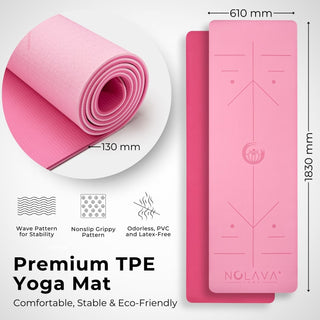
Thickness. Yoga mat thickness is the first decision. Around 6mm (1/4") gives extra joint protection for knees, wrists and hips — the most comfortable all-rounder for home practice. Thinner 3–4mm mats offer more floor connection for balance work but less cushioning. The NOLAVA Pink TPE Yoga Mat is 1/4" thick — cushioned enough for sensitive knees, stable enough for standing poses.
Size. A standard 68" mat suits most people, but if you're taller — or simply like room to move — choose 72" x 24", the size we build ours to.
Grip and texture. Look for a double-sided non-slip texture: wavy or dimpled underneath to anchor the mat to the floor, smoother on top for comfort under hands and feet.
Extras that matter daily. A carry tote or strap gets the mat to class; a slap band keeps it rolled tight in the cupboard. If you're starting from scratch, a bundle like the 6-Piece Pink TPE Yoga Mat Set (mat, knee pad, blocks, strap and slap band) or the 7-Piece Purple Yoga Set costs less than buying the pieces separately.
How to clean a TPE yoga mat
One of TPE's underrated advantages: it's closed-cell, so it doesn't drink up sweat and odour the way open-cell rubber does. Cleaning is quick — if you follow a few rules.
After each practice: wipe the mat down with a soft cloth dampened in plain water, or water with a drop of mild dish soap for sweatier sessions. Wipe again with a clean damp cloth to remove any soap residue.
Weekly (or after hot yoga): mix a gentle solution — a few drops of mild soap in warm water, or equal parts water and white vinegar — lightly spray, wipe with a soft cloth, and pat dry with a towel.
The don'ts — these shorten a TPE mat's life: don't soak the mat or put it in a washing machine; don't use alcohol, bleach or harsh cleaners, which break down the surface and its grip; don't scrub with abrasive brushes; and don't dry it in direct sunlight or leave it in a hot car — TPE is heat-sensitive, so air-dry it flat or over a rail indoors.
Storage: once fully dry, roll it loosely with the top surface facing out and store it away from heat. Cared for this way, a quality TPE mat lasts for years of daily practice.
5 key reasons TPE is the best choice for yoga mats
Eco-friendly: biodegradable, recyclable and free from harmful chemicals — the most sustainable option compared to PVC or rubber.
Non-toxic: free from phthalates, PVC and latex — safe for your body and the environment.
Superior grip: stays non-slip even in sweaty conditions, perfect for all styles including hot yoga.
Lightweight and portable: easy to roll, carry and travel with.
Excellent cushioning: elastomeric support that protects your joints during practice.
Conclusion
The material you choose significantly impacts your practice and your health. TPE yoga mats offer the best balance of performance, comfort and environmental responsibility — and with the simple cleaning routine above, yours will support your practice for years. Explore our full NOLAVA Yoga collection, from single mats to complete sets, and pair your practice with a wind-down on the free NOLAVA mindfulness app.